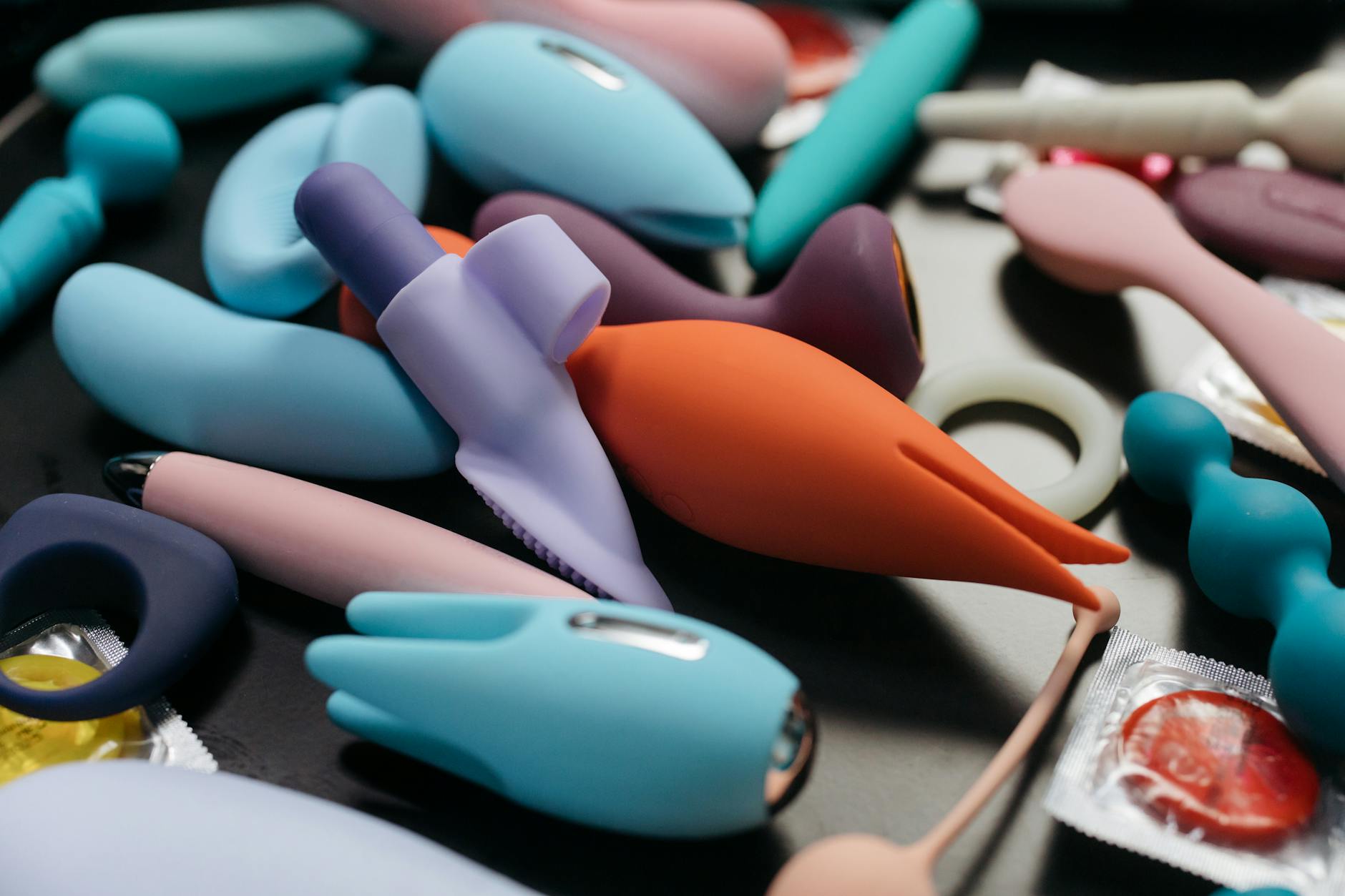
Here's the thing about vibration sensitivity
You're not broken. Your nervous system is just wired to register vibration more intensely than others, and that's actually pretty common. Between 15-20% of people describe themselves as vibration-sensitive, meaning they find traditional vibrators either overwhelming, tiring, or in some cases downright painful.
The tricky part? Most sex toys are designed for people who want maximum stimulation. That leaves vibration-sensitive folks stuck between two bad options: suffer through it or give up.
Lemon vibrators change this equation entirely. Not because they're weaker, but because they work in a fundamentally different way than traditional vibrators.
Why traditional vibrators are the problem
A standard vibrator creates stimulus through rapid back-and-forth movement. Think of it like jackhammer energy. For someone whose nervous system amplifies vibration signals, this becomes sensory overload. Your nerves register the stimulus intensely and consistently. After five minutes, you're exhausted. After ten, it actually starts to feel unpleasant.
This isn't a pleasure response. It's sensory fatigue.
There's another piece to this too. Some people with vibration sensitivity have a nervous system response that actually dampens arousal under sustained vibration. The intensity sends you into a slight fight-flight state. Your body gets tight instead of more receptive. It's the opposite of what you want.
How lemon clitoral vibrators work differently
Lemon vibrators (like the Lem) use suction-based stimulation, not vibration. This is the key difference. Instead of a vibrating motor creating oscillation, suction creates a gentle pulling sensation that stimulates the nerves in the clitoris without the overwhelming frequency of a traditional vibrator.
The experience is closer to oral stimulation than to a vibrator. It's rhythmic without being relentless. You get sensation, but your nervous system doesn't perceive it as an assault.
For vibration-sensitive people, this distinction is enormous. You're not fighting against your body's wiring. You're working with it.
The pattern and intensity advantage
Most lemon vibrators offer multiple patterns and intensity levels. But here's what matters for vibration sensitivity: the lower patterns tend to feel less like vibration and more like a steady pulse. You can find a rhythm that feels good without that jackhammer frequency that makes you tense up.
Start at pattern 1 or 2, not because you're doing something wrong, but because that's where the suction rhythm is gentlest. Many vibration-sensitive people find that patterns 3-5 start to re-introduce that vibration-like intensity they're trying to avoid.
Intensity levels work similarly. Higher isn't better. It's just more. For you, "medium" might be your sweet spot indefinitely, and that's completely valid.
Warm-up time is your secret weapon
Vibration-sensitive bodies need longer arousal cycles. This is neurological, not psychological. Your nervous system needs more time to shift into a receptive state before introducing any kind of intense sensation.
Budget 15-20 minutes of non-toy foreplay or solo attention before you even touch a lemon vibrator. This might feel slow, but it's the difference between your session feeling amazing or feeling exhausting.
Once you're genuinely aroused, the nervous system is already primed. The suction sensation lands differently. What might have felt overwhelming when you were at 20% arousal feels perfect at 75% arousal.
Placement and angle matter more than intensity
Traditional vibrators often need to be pressed pretty firmly against the clitoris to feel like anything. This creates tension in your hand and pelvic floor, which actually amplifies sensitivity in a bad way.
With a lemon vibrator, the suction creates sensation even with lighter contact. Experiment with angles. Try placing it more toward the side of your clitoris rather than dead center. Try backing off slightly so it's not fully sealing but still creating suction. These small adjustments can transform the experience from overwhelming to exactly right.
For partner play, this is also huge. You can enjoy a lemon vibrator without needing your partner to hold it with absolute firmness, which means less hand fatigue for them and more comfort for you.
The pelvic floor connection
Vibration sensitivity often comes with pelvic floor tension. Your muscles tighten defensively against intense sensation, which ironically makes you feel the vibration more intensely. It's a feedback loop.
Before using any toy, spend two minutes on pelvic floor relaxation. Not kegels (the opposite of what you need right now). Literally just breathing slowly and consciously relaxing your pelvic floor. Imagine the muscles softening, opening slightly.
When you start with a lemon vibrator, stay aware of your pelvic floor. If you notice tension creeping in, pause, breathe, and reset. This awareness changes everything about how the sensation feels.
Building tolerance over time
Vibration sensitivity isn't fixed. Many people find that as they use a lemon vibrator consistently and learn what feels good, their nervous system actually becomes less reactive. Not because you're forcing yourself to adapt, but because you're experiencing pleasure in a way your body recognizes as safe.
Over weeks or months, some people with vibration sensitivity find they can gradually try higher patterns or intensities. Others find that their sensitivity stays the same and they're perfectly content with their preferred patterns. Both are completely fine.
The goal isn't to "overcome" your sensitivity. It's to build a pleasure practice that works with your actual nervous system, not against it.
When to explore external support
If vibration sensitivity is tied to anxiety, past trauma, or a diagnosed sensory processing issue, working with a sex therapist or somatic practitioner can be genuinely helpful. They can give you tools specific to your situation.
If your sensitivity appeared suddenly or is getting worse, check in with a gynecologist or pelvic floor therapist. Sometimes it's a symptom of something treatable.
But if you're just naturally vibration-sensitive and looking for a solution? A lemon clitoral vibrator paired with the strategies above might be exactly what changes the game for you.
The bigger picture
Your sensitivity isn't a problem to fix. It's information about how your nervous system works. Once you accept that and choose tools and practices that honor it, pleasure becomes accessible in a way it never was before. That's not settling. That's actually winning.
FAQ: Vibration Sensitivity and Lemon Vibrators
Can vibration sensitivity be permanent?
Not necessarily. Some people find their sensitivity decreases as they build positive experiences with toys that don't overwhelm their nervous system. That said, some people are naturally more vibration-sensitive throughout their lives, and that's fine. The goal is finding what works for your body, not forcing yourself to tolerate high vibration.
Will a lemon vibrator feel like nothing if I'm used to strong vibrators?
Probably at first, because you're expecting vibration. But after one or two sessions, most people notice the suction sensation is actually quite powerful, just in a completely different way. It's not "less strong," it's a different kind of strong. Give it three or four sessions before deciding.
Is vibration sensitivity connected to hormonal changes?
Sometimes, yes. People often notice increased vibration sensitivity during certain points in their cycle, during perimenopause, or after hormonal shifts. If you've always been able to handle intense vibration and suddenly can't, tracking it alongside your cycle might reveal a pattern.
Can I use a lemon vibrator if I have an anxiety disorder?
Yes, actually. Many people with anxiety find that the suction sensation of a lemon vibrator is less triggering than traditional vibrators. The rhythm is more predictable, and the sensation is easier to control. Start at the lowest intensity and give yourself full permission to stop if something doesn't feel right.
What if I'm sensitive to suction as well?
Some people are sensitive to multiple types of stimulation. If even gentle suction feels uncomfortable, focus on longer warm-up time, lower intensities, and lighter contact. You might also enjoy the toy more on certain patterns than others. Explore without pressure.
Should I use lube with a lemon vibrator if I'm vibration-sensitive?
Yes. A good water-based lube reduces friction and can actually make the sensation feel gentler and more comfortable. It also prevents your skin from becoming irritated, which can increase sensitivity. Don't skip this step.
Related reading
If you're exploring how lemon vibrators fit into your pleasure practice, you might also want to read about how to find the right lemon vibrator intensity for your body type. We also cover why lemon vibrators feel softer during extended play sessions, which directly connects to nervous system adaptation.
For partner dynamics, how to use lemon vibrators during partner sex without awkwardness walks through communication and practical positioning that honors your sensitivity while keeping connection strong.
Have questions about how a lemon vibrator might work for your specific situation? Reach out anytime at /contact.