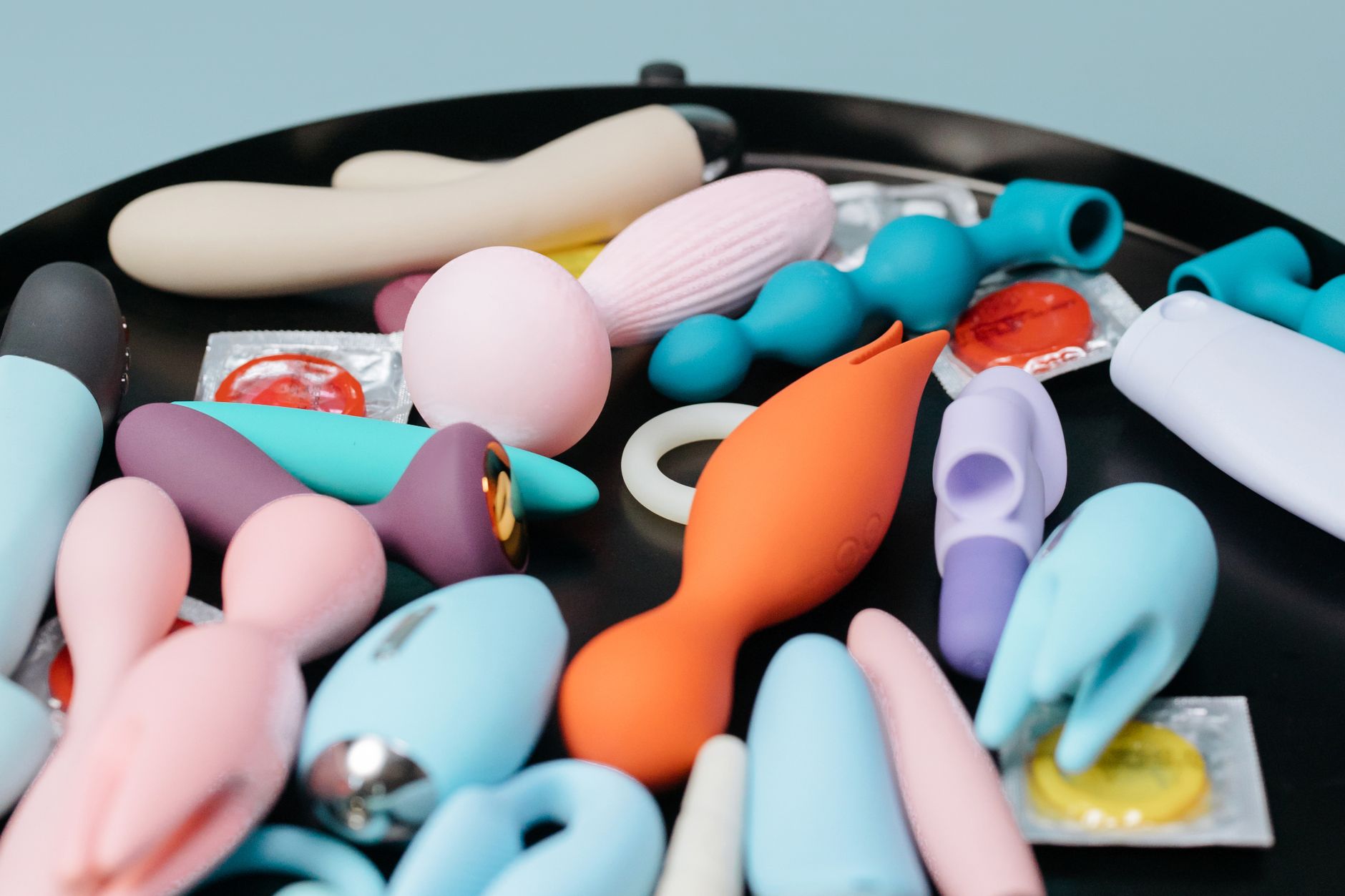
The awkwardness is temporary. The pleasure is permanent.
Honestly? The hardest part about solo pleasure after years with a partner isn't the physical mechanics. It's the mental transition from "we" to "I." Your body remembers what it's like to be touched, to be desired, to build arousal in rhythm with another person. Now you're standing alone in your bedroom with a lemon clitoral vibrator, and your brain is screaming that this is somehow sad or wrong or too self-focused.
It's not. This is actually one of the most important things you can do for yourself right now.
Why solo pleasure matters after partnership
When you've spent years, sometimes decades, choreographing your arousal around a partner, you lose touch with what actually turns you on. Your body learned to respond to their rhythm, their timing, their preferences. You may have stopped noticing what genuinely makes you come, what speed works, what kind of touch or pattern actually feels best to you.
Starting solo with lemon vibrators isn't a consolation prize. It's a reclamation project. You're rebuilding the conversation between your brain and your body. That conversation is foundational, and it's entirely yours.
Research on solo sex after long-term partnership shows something striking: people who rebuild their solo pleasure practice first report more satisfying partnered sex later, if they choose partnership again. Not because they're better at technique, but because they've relearned their own genuine responses.
The first-time feelings are normal (and temporary)
You might feel guilty. You might feel awkward. You might feel like you're doing something wrong, or self-indulgent, or unfaithful to someone who's no longer in your life. All of that is grief dressed up in shame. Let it pass through.
Start small. Give yourself permission to just hold a lemon vibrator and do nothing with it. Plug it in, listen to the pattern, touch it to your arm or your collarbone. Get used to the weight and the sensation without the pressure of needing to orgasm or prove anything. This is an audition for yourself, not a performance review.
How to approach your first solo session
Three non-negotiables:
Set actual time aside. Not "whenever," not a rushed 10 minutes while your roommate's in the shower. Give yourself 30 to 45 minutes. Close the door. Silence your phone. This isn't laziness or indulgence. This is you saying your pleasure deserves the same structure and respect your partner's pleasure used to demand.
Start without the toy. Touch yourself first. Remember what you liked before partnership, or discover it for the first time. Use your fingers, your palm, whatever feels good. Let your mind wander. This is reconnaissance. Your body is sending you data about what it wants.
Introduce the lemon vibrator slowly. Don't jump to high intensity. Start at pattern 1 or 2. The beauty of lemon clitoral vibrators and lem vibrators is their precision. You're not hoping to accidentally stumble onto sensation. You're learning exactly what frequency and rhythm make your specific body light up.
What happens when the pressure lifts
Most people report that the first few sessions feel strange or mechanical. That's fine. Your nervous system is adjusting. You're rebuilding trust between your brain and your body. That takes a few runs.
But something shifts around session three or four. Suddenly you notice something: you're coming for a reason that has nothing to do with anyone else's satisfaction. You're not performing. You're not trying to prove anything. You're just pursuing sensation because your body wants it.
That's the moment that matters. That's when solo pleasure stops being a consolation prize and starts being a genuine relationship with yourself.
Dealing with the comparison trap
Your brain will do something sneaky. It will say: "This doesn't feel the same as when my ex did it." Or: "I'm coming faster alone, so clearly I never really wanted sex in that relationship." Or the inverse: "I can't come solo, so there must be something wrong with me."
All of these thoughts are normal. None of them are true.
Partner sex and solo sex activate different systems in your nervous system. When a partner touches you, it engages the social brain, the affiliative system, the nervous system's calm-and-connect mode. Solo play engages the pleasure-seeking system. They feel different because they are different. Neither is the "real" version of your sexuality. They're different flavors.
For the comparison spiral specifically: if you're coming faster alone than you did with a partner, it's not because you didn't want your partner. It's because you know exactly what your body needs and you're not negotiating timing or technique with someone else. That's a feature, not a bug.
The role of lemon vibrators in rebuilding confidence
Why specifically lemon vibrators or lem vibrators? Because they work. Air-suction technology stimulates nerves without aggressive friction, which means less fatigue during longer sessions and more precise sensation control. For someone rebuilding their relationship with pleasure, precision matters. You want immediate, undeniable feedback. You want to know you're doing something right.
That feedback builds confidence faster than anything else.
Focus on sensation, not outcome. Notice what patterns feel good. Notice which settings make you tense up and which ones make you relax. Notice whether you prefer speed or that gentle pulsing rhythm. You're gathering intelligence about yourself.
Managing the emotional weight
Solo pleasure after partnership isn't just physical. It's also an emotional process. You might feel sad while touching yourself. You might feel grief, anger, loneliness, relief, or joy. Sometimes all of those in sequence.
That's not a sign something's wrong. That's your body processing what it's lost and what it's reclaiming simultaneously.
If grief shows up during solo time, you can pause. You can cry. You can sit with it. You don't have to perform pleasure through grief. The goal isn't a perfect orgasm every time. The goal is rebuilding your relationship with your own pleasure, and that includes space for the hard feelings.
When to know it's working
You'll notice it when it clicks. You'll reach a point where you're thinking about your own pleasure during the day. You'll find yourself anticipating solo time. You'll stop comparing it to partnered sex and start appreciating it as its own thing. You'll stop feeling guilty and start feeling resourced.
That shift usually takes 4 to 6 weeks of consistent practice. Not every session needs to end in orgasm. Some of the most valuable sessions are the ones where you just reconnect with sensation and relaxation.
The deeper shift comes later: realizing that you've moved from "I'm alone" to "I'm not alone with myself anymore." That your body is trusted territory again. That your pleasure is information you can rely on.
FAQs
What if I don't feel aroused during solo play after years with a partner?
Low arousal after partnership is incredibly common. Your nervous system spent years linking arousal to another person's presence. That association needs time to untangle. Keep showing up, but don't force anything. Sometimes the most valuable sessions are the ones where you simply practice relaxation and sensation without the goal of orgasm. That's still rebuilding your capacity to feel. Arousal often returns after consistency creates safety.
Is it normal to feel guilty while using a lemon vibrator solo?
Yes. Guilt is often attachment dressed up as shame. You may have internalized the belief that your sexuality exists for your partner, or you may be grieving the loss of partnership while simultaneously claiming pleasure for yourself. Both of those are real. The guilt typically softens as you practice. Remind yourself that your pleasure is not a betrayal of the relationship you had. It's evidence that you're healing.
Should I orgasm every time, or is it okay to stop whenever?
Orgasm is not the point. Pleasure, sensation, and reconnection are. Some sessions will end in orgasm. Others will be about relaxation or just remembering what your body feels like without pressure. Stop whenever you want. That's actually the most important skill you're learning: listening to your own body's signals instead of performing for someone else.
How often should I practice solo pleasure to rebuild confidence?
Consistency matters more than frequency. Two to three times a week is a solid starting place, but if that feels like pressure, start with weekly. The point is showing up regularly enough that your nervous system stops treating it as a novelty and starts treating it as normal self-care. Most people find their rhythm increases naturally once the guilt lifts.
What if I'm worried about becoming dependent on lemon vibrators for pleasure?
Lemon clitoral vibrators are a tool, not a crutch. You can use them, take breaks from them, use your fingers, use both in the same session. Variety actually strengthens your capacity for pleasure. What matters is that you're reconnecting with your own signals. The tool is just the messenger.
Can solo pleasure help me prepare for future partnered sex if I want it?
Absolutely. When you know exactly what makes your body respond, you can communicate that to a future partner. You're not a mystery anymore, not even to yourself. That clarity makes partnered sex more satisfying for everyone because there's less guessing and more genuine responsiveness. You're also healing the split between your "selfish" solo pleasure and your "generous" partnered sex. Pleasure doesn't have to be either-or.
Your pleasure is the foundation
Starting solo after years with a partner isn't about bouncing back or proving you're fine. It's about rebuilding fundamental trust in your own body and rebuilding your capacity to pursue sensation on your own terms. That's not a detour from healing. That's the healing.
You've spent years being desired. Now spend some time desiring yourself. That's not selfish. That's survival. That's reclamation. That's where real healing lives.
If you're navigating the emotional or relational side of this transition, I'm here to help. Reach out at /contact and we can talk through what this season looks like for you.