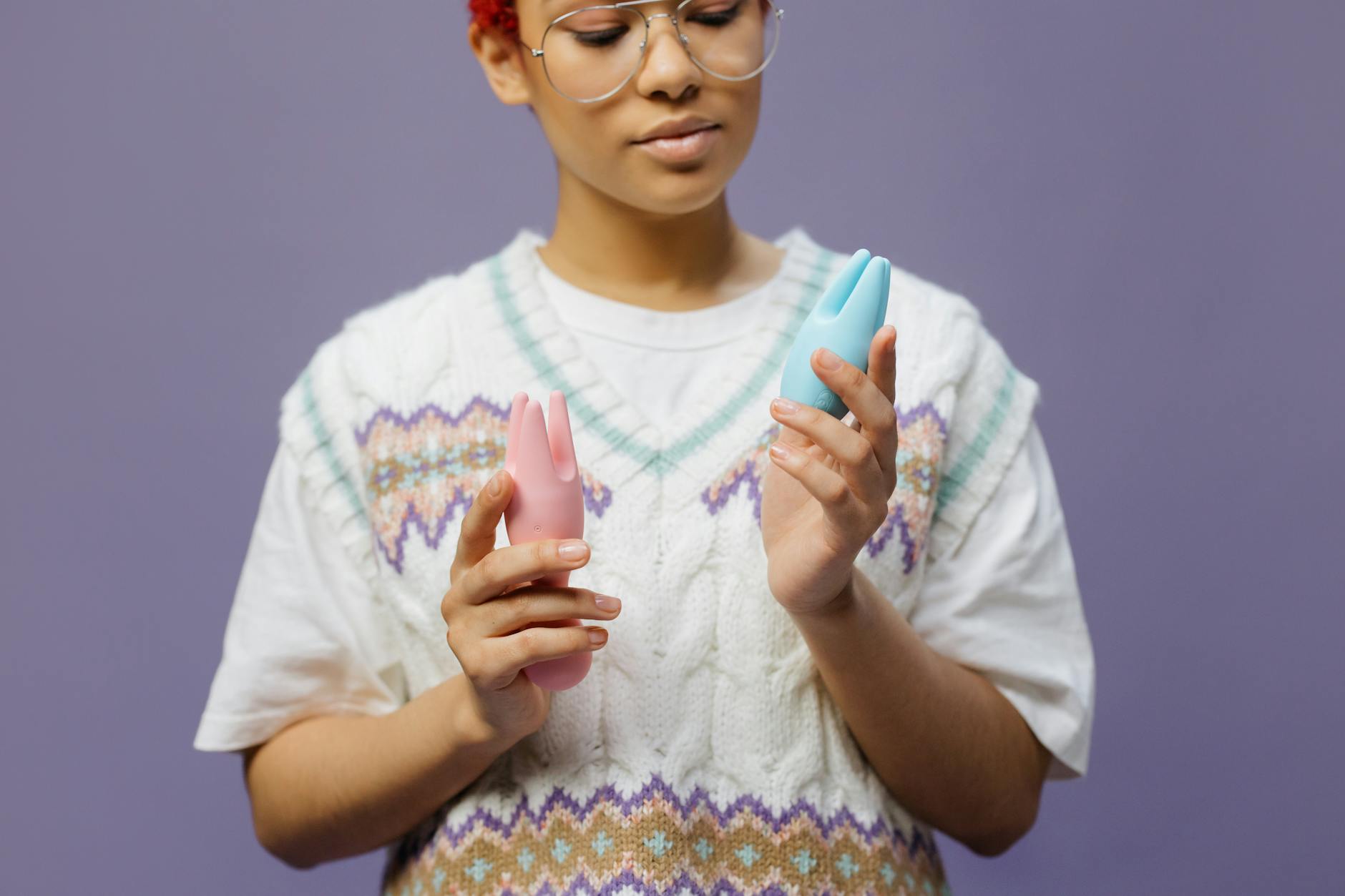
Let's start with what's actually happening
Clitoral sensitivity doesn't disappear with age. It transforms. The tissue thins slightly, blood flow patterns shift, and the nerve density remains constant but responds differently to stimulation. What this means in real terms: the direct, high-intensity sensation that might have worked brilliantly at twenty-five can feel overwhelming or even uncomfortable at thirty-five or forty-five. And that's not a loss. That's information.
Here's the thing nobody explains clearly. The clitoris is 8,000 nerve endings packed into a space the size of a pea. Those nerves don't go anywhere as you age. They just reorganize how they fire. Estrogen changes affect tissue elasticity and blood flow, which changes how quickly arousal builds and how intensely sensation registers. But the capacity for pleasure, for orgasm, for deeply satisfying sensation? That's not going anywhere.
My clients often describe the shift as moving from a hair-trigger response to something more nuanced. Less "I felt that immediately" and more "I need to build to this intentionally." Both versions work. They're just different conversations with your body.
The specific changes that happen
Three shifts occur as estrogen declines and overall tissue changes:
The sensitivity threshold widens. When you were younger, light stimulation triggered a noticeable response. Now you might need more initial pressure or longer buildup time before sensation registers. This isn't numbness. It's a change in the ratio of stimulus to response.
Recovery time between orgasms changes. You might be capable of multiple orgasms, but the window narrows or shifts. Some people find they want longer breaks between peaks. Others discover they can layer sensations differently.
Direct pressure can overstimulate. Paradoxically, as overall sensitivity shifts, direct vibration sometimes feels too intense on the clitoris itself. This is where clitoral suction devices like Lemon's air-pulse vibrators become game-changing. Suction works differently than vibration. It stimulates through rhythmic pressure changes rather than rapid oscillation, which many people find more comfortable on tissue that's become more sensitive to friction.
Why clitoral suction works better for changing sensitivity
Let me explain the difference, because it matters for how you'll actually use a lemon vibrator.
Traditional vibrators use rapid oscillation. The device vibrates at a set frequency, delivering hundreds of pulses per second directly to tissue. It's intense, immediate, and works beautifully for many bodies. But when tissue becomes more reactive to stimulation, that constant friction can feel sharp rather than pleasurable.
Clitoral suction uses a different mechanism. The device creates rhythmic pressure changes, gently drawing the clitoris into a soft opening and releasing. It's not vibration. It's more like a gentle pulse that stimulates the deeper nerve clusters without the surface friction. For people experiencing sensitivity changes, this feels less like a direct hit and more like a wave of sensation.
Research backs this up. Studies comparing clitoral suction to traditional vibration show that suction devices often produce faster arousal and more intense sensation for people with lower initial sensitivity. The mechanism is kinder to tissue that's become more easily overwhelmed.
How to adjust your technique
If you've been using vibrators for years and suddenly they don't feel right, here's how to reset.
Start with the lowest setting and build. This sounds obvious, but most people skip it. They're used to moving to intensity level 4 or 5 right away. Now, spend 5-7 minutes on level 1. Let your body register the sensation and arousal build. You're retraining your sensitivity curve, not forcing it.
Spend longer on indirect stimulation first. Instead of going straight to direct clitoral contact, apply the device to the surrounding area, the mons pubis, the inner thighs, the labia. This warms up your nervous system and builds arousal before direct contact. It feels less like jumping into a cold pool and more like easing in.
Use lubrication strategically. Water-based lubricant between your skin and the device reduces friction-based overstimulation without making the suction less effective. It's the barrier between intensity and discomfort.
Vary the contact pattern. Instead of holding the device in one spot, move it in small circles or side to side. This distributes stimulation across a wider area of tissue and prevents the overwhelm that can come from concentrated pressure.
Take breaks. If sensation starts feeling sharp or uncomfortable rather than pleasurable, pause. Your clitoris doesn't need to be continuously stimulated. Some of the best orgasms come from a rhythm of stimulation, recovery, and resumption.
Why this matters for long-term pleasure
Here's what I've learned working with couples navigating pleasure changes. When sensitivity shifts and you try to force the old technique, two things happen.
First, you develop frustration. You assume something is broken. You blame the toy, blame your body, blame aging. You stop exploring because it feels like you're chasing something that used to work and doesn't anymore.
Second, you miss the actual pleasure that's available now. The sensation you're capable of experiencing post-thirty-five is not worse than what you had at twenty-five. It's different. More intentional. Often more satisfying because it requires presence rather than just response.
When you adjust your technique to match your current sensitivity, orgasms often become stronger, not weaker. You're working with your body instead of against it. You're using tools like clitoral suction vibrators in ways that complement how your tissue actually responds now.
The role of your partner, if you have one
If you're exploring these changes with a partner, the conversation matters as much as the technique. "My body is responding differently to stimulation" is not the same as "I'm less interested" or "You're not turning me on." Confusion between those three statements creates unnecessary tension.
Many partners assume clitoral sensitivity changes mean decreased desire or that they've done something wrong. They haven't. The tissue is just aging. It's the same change that happens everywhere else on your body. It doesn't mean the pleasure is gone. It means you both get to figure out what works better now.
If you're using a lemon vibrator together, the shift to suction-based stimulation often feels different to a partner too. It's quieter, less mechanical feeling, sometimes more integrated into foreplay. Some couples find this actually deepens intimacy because it requires more attention and intention than just turning on an older vibrator style.
When sensation stays the same or gets better
Not everyone experiences decreased sensitivity. Some people report their sensation actually heightens with age, especially after menopause when they're freed from hormonal cycling. Others feel no change at all.
If you're in this camp, keep doing what works. You don't need to change anything. But you might find that exploring suction-style devices opens up new sensations even if your current sensitivity is fine. Many people with stable or heightened sensitivity love clitoral suction because it produces a different quality of orgasm than vibration. It's not a downgrade or adjustment. It's another tool.
People also ask
Does clitoral sensitivity really decrease with age, or is it just a myth?
It's not a myth, but it's also not universal. Sensitivity does shift for most people as estrogen declines and tissue changes. But "shift" is different than "disappear." Some people experience lower initial responsiveness. Others experience the same responsiveness but need different stimulation patterns. And a significant minority report no change or increased sensitivity. It's biological, individual, and not something to pathologize.
Can I still have multiple orgasms if my sensitivity has changed?
Yes. Multiple orgasms are definitely still possible. What often changes is the timing and the sensation pattern. Where you might have had rapid-fire orgasms in quick succession, you might now experience plateaus where sensation builds, releases, dips, and rebuilds. Both are valid. You're working with your body's current rhythm rather than comparing it to a rhythm that was useful fifteen years ago.
Will using a lemon vibrator make the sensitivity issue worse?
No. Using the right tool with the right technique makes it better. An ill-fitting vibrator used incorrectly can make overstimulation worse, which is why technique matters so much. But a well-designed device used in a way that matches your current sensitivity absolutely helps you access the pleasure that's available to you right now.
How do I know if I'm using too much intensity too fast?
Your body will tell you. Pleasure sensation is warm, building, integrating. Overstimulation feels sharp, scattered, or like you're chasing something that keeps moving away. If you're having trouble reaching orgasm or sensation feels uncomfortable rather than pleasurable, drop the intensity, slow down, and spend more time on buildup. That's not failure. That's listening.
What's the difference between a lemon vibrator and a traditional vibrator for aging sensitivity?
Traditional vibrators use rapid oscillation, which can feel intense or sharp on tissue that's become more reactive. Clitoral suction devices create rhythmic pressure changes that stimulate deeper nerve structures without surface friction. For many people experiencing sensitivity changes, suction feels more comfortable and often produces faster arousal. But the best device is the one that feels good to your body. Suction isn't inherently superior. It's different, and sometimes different is exactly what works.
Is it normal to need longer arousal time as I age?
Completely normal. Blood flow changes, hormonal shifts, and tissue changes all mean arousal builds on a slightly different timeline. Where fifteen minutes of foreplay got you there at twenty-five, you might need twenty-five now. That's not a sign something's wrong. That's biological reality. And honestly? It often deepens intimacy because it requires more presence and intention from you and your partner.
What to do next
If your sensitivity has shifted and you're frustrated with old techniques, you don't need to accept decreased pleasure. You need to adjust your approach.
Start by noticing what actually feels good right now without judgment. Not what worked before. Not what you think should work. What genuinely registers as pleasurable sensation in your body as it is right now.
If you're considering trying clitoral suction for the first time, approach it the way you'd approach any new tool. Start with the lowest setting, spend time on buildup and indirect stimulation, use lubrication, and pay attention to what your body is telling you. You're not replacing what worked before. You're adding a new option that might work better now.
Sensitivity changes are normal, manageable, and absolutely not a reason to abandon pleasure. They're just information about how your body wants to be touched these days. Listen to it.
If you want to explore this further or have questions about what might work for your specific situation, we're here to help. Get in touch anytime.