
Let's be real about delayed orgasm
Orgasm should not feel like a project. But for a lot of people, it does. The buildup takes forever, the intensity never quite peaks, or you get close and then the whole thing stalls. If that's you, you're not broken, and you're not alone. About 30 percent of people with vulvas report difficulty reaching orgasm, and the causes run the full spectrum from medical to emotional to purely mechanical.
Here's the thing: sometimes the problem isn't your body. Sometimes it's the tool, the technique, or the context. Lemon vibrators, especially clitoral suction devices like the Lem, work differently than traditional vibrators and can change the equation entirely.
Why orgasm gets slower or harder over time
There are usually three culprits working alone or together.
Reduced nerve sensitivity. Age, hormones, medications, and childbirth all dull clitoral nerve response. If you've been on antidepressants, certain blood pressure meds, or hormonal birth control for years, your baseline arousal speed has likely shifted. The neural pathways still work, but they need more activation energy to fire. When you're trying to come with a device that just vibrates at the same rhythm and pressure, you're fighting an uphill battle.
Mental load that doesn't switch off. Performance anxiety, relationship stress, work worry, grief. The brain is the largest sex organ, and when it's flagged with 47 things to do before Wednesday, the body can't focus on sensation. You might feel physically aroused but mentally locked out. This is wildly common in long-term relationships and doesn't mean anything is wrong with desire itself.
Sensation fatigue from repetition. If you've been using the same vibrator at the same speed for five years, your nerve endings have adapted to it. Novelty, variation, and change in stimulation pattern wake that responsiveness back up. This isn't about being broken. It's about your nervous system being efficient.
How lemon vibrators work differently
Most vibrators buzz at a fixed frequency (usually 40 to 100 Hz). They're good tools, but they deliver the same sensation over and over. Your body learns the pattern and stops registering it as novel.
Lemon clitoral vibrators use air-pulse suction instead of conventional vibration. This means the device doesn't jiggle your tissue. It gently surrounds and pulses around the clitoris, creating waves of pressure rather than direct friction. For someone whose nerves have gotten sluggish or whose tissue is sensitive, this is often a revelation.
Why this matters: suction stimulation triggers different nerve fibers than vibration alone. It can reactivate sensation that conventional vibrators have stopped reaching. It also builds arousal in a different rhythm, which breaks you out of the mental pattern your brain has learned to tune out.
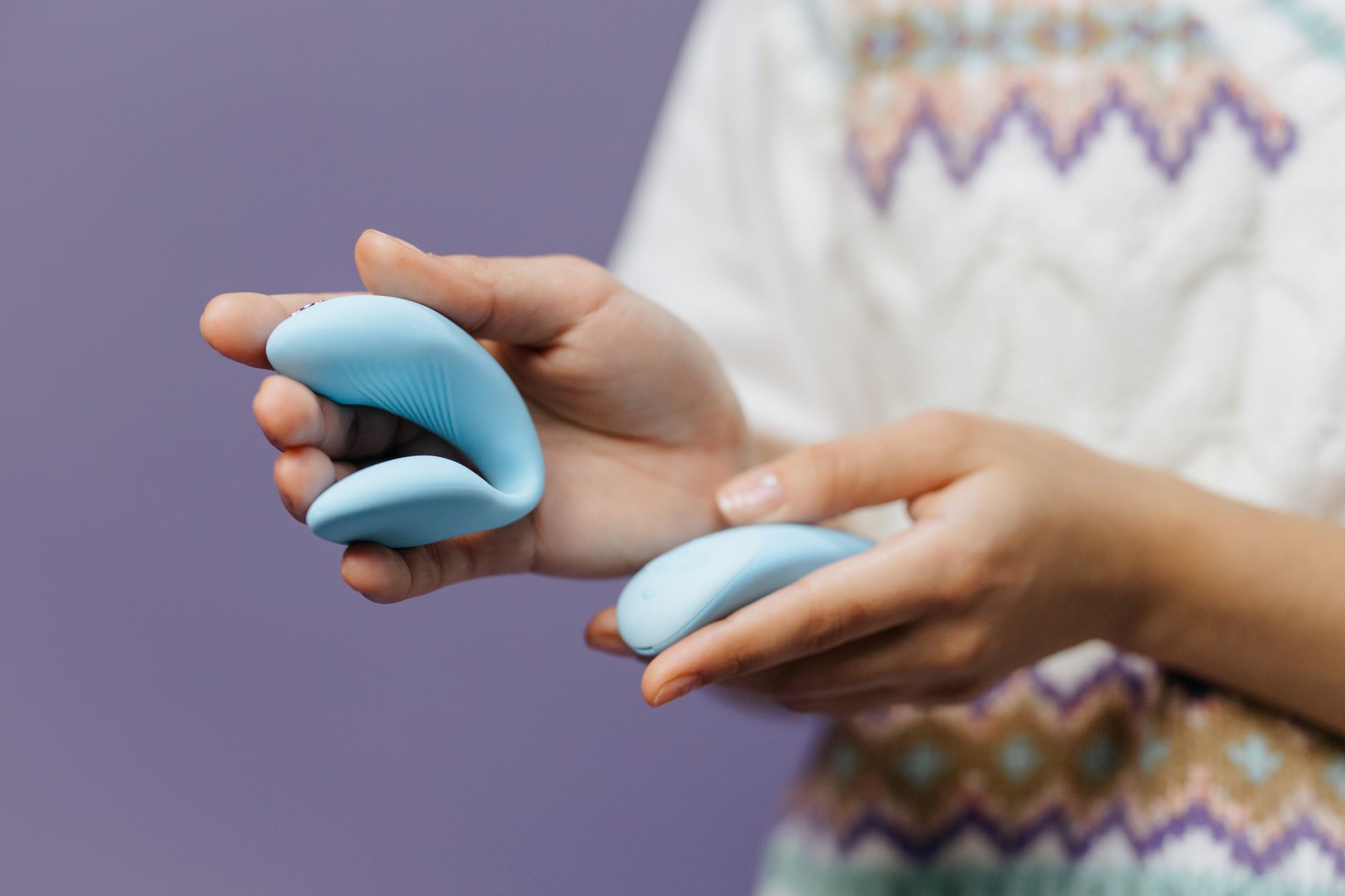
Photo by cottonbro studio on Pexels
The practical setup that works
If you're using a lemon vibrator and the orgasm still feels like it's taking hours or stalling halfway, try this sequence.
Start lower and slower. Don't jump to level 5. Begin at level 1 or 2 and spend time there. Your job isn't to rush to orgasm. Your job is to let your nervous system remember what building arousal feels like. This usually takes 10 to 15 minutes. It feels long. It is supposed to.
Use lube, even if you don't think you need it. Lubrication isn't just about friction reduction. It changes how the suction sensation registers. Water-based lube makes the pulse feel richer and more varied. It also removes the micro-strain of dry contact, which your brain has probably been registering as "effort" rather than "pleasure."
Vary the pattern. Most lemon sexual toys have multiple pulse modes. Switch between them. Don't stay on one rhythm for more than five minutes. The novelty alone often kicks arousal back into motion. Your brain needs new input to stay engaged.
Build time between sessions. If you're using a clitoral vibrator every day, your nerve endings become less responsive to it. Step back to three or four times a week. Yes, this feels counterintuitive when you're chasing an orgasm. But the break lets your sensitivity recover.
When the issue is emotional, not physical
If orgasm has disappeared alongside relationship tension or a major life stressor, a lemon vibrator won't fix the root cause. But it can help you reconnect with your own pleasure separately from that stress. Solo sessions with a lemon clitoral vibrator create a space where the only person you're trying to satisfy is yourself.
This matters because delayed orgasm in relationships often stems from performance pressure. When you're worried about taking too long, disappointing your partner, or not being "responsive enough," the nervous system goes into a low-grade fight-or-flight mode. Orgasm requires parasympathetic activation (rest-and-digest). You can't get there from performance anxiety.
When you use lemon vibrators solo, you rewire that. You learn what your body wants without an audience. You figure out the patterns and intensity levels that actually work for you. Then you can bring that knowledge back to partnered sex. This is the highest-leverage move I've seen in my therapy practice.
The role of foreplay and buildup time
Here's something that shows up in almost every case of delayed orgasm: not enough setup. People often expect orgasm to arrive after 5 to 10 minutes of stimulation. If that's not your baseline, you're already frustrated before you've given your body enough time to work.
With lemon vibrators, budget at least 20 minutes. Spend the first 5 to 10 minutes on indirect stimulation. Use the device on the labia or just around the clitoris, not directly on it. Then move to direct clitoral contact. This layered approach keeps your nervous system engaged rather than numbing it.
If you're with a partner, bring them into this timeline. Talk through what you actually need. "I want to try 20 minutes of buildup before we use the vibrator" is a completely reasonable ask. Many partners respond well because it takes the pressure off them to create orgasm through penetration or manual stimulation alone.
When speed matters less than consistency
Some people stop reaching orgasm because the sensation is building but it's taking so long that they lose focus. Your mind wanders. You check the time. And then you're back to square one.
This is where rhythm consistency helps. Lemon clitoral vibrators maintain a steady pulse. You don't have to think about rhythm changes or pressure variation. Your job is to stay present. Set a time limit (give yourself at least 25 minutes) and commit to it. Phone away, door locked, distractions minimal.
If your mind still wanders, that's not a failure. Gently bring your attention back to sensation. What does the suction feel like right now? Is it concentrated on one spot or diffused? What happens if you relax your legs a little more? Staying anchored in physical sensation is a skill that builds over time.
When to pause and reassess
If you've tried a lemon vibrator consistently over four to six weeks and orgasm still isn't arriving, something else might be at play. Certain medications genuinely suppress orgasm capacity. Some health conditions do too. If that's the case, a conversation with your doctor or a sex therapist who specializes in medication side effects is worth it.
Also: if the challenge is pain rather than slowness, read about how to use lemon vibrators when you have pain during penetration. Different issue, different strategy.
For many people, though, the shift happens quietly. You start noticing that orgasm arrives in 18 minutes instead of 45. Then 12. Then it's just a normal part of the experience again. That's not instant. But it's real.
Troubleshooting common scenarios
If you're in a long-term relationship and delayed orgasm is new, the cause is usually emotional, not physical. See how to use lemon vibrators when rebuilding intimacy with a long-term partner for relationship-specific strategies.
If the issue started after a medication change, mention it to your prescriber. They might adjust dosage or timing in ways that help. Meanwhile, how to use lemon vibrators when antidepressants affect your arousal and orgasm has tactics for working with that specific challenge.
If you've never been able to reach orgasm reliably, that's a different starting point. It's not something a vibrator can't address, but it requires patience and sometimes professional support.
FAQ: Your actual questions answered
Q: Does using a vibrator too much make orgasm harder to reach without one?
A: Not the way you're thinking. Vibrators don't "desensitize" you permanently. What happens is your nervous system adapts to familiar stimulation. If you use the exact same device at the exact same speed for two hours every day, sure, your responsiveness to that specific pattern will drop. But take a week off, switch devices, or vary the pattern, and sensitivity returns. This is adaptation, not damage.
Q: Can anxiety about taking too long actually delay orgasm further?
A: Absolutely. Performance anxiety is one of the most common suppressors of orgasm. The worry about being slow triggers a low-grade stress response. Your body stays in sympathetic (fight-or-flight) mode instead of shifting to parasympathetic (rest-and-digest). You can't orgasm from a stress state. The antidote is to separate solo exploration from partnered sex temporarily, so you're not tangled up in someone else's expectations.
Q: How long should I wait before trying a new approach if nothing is working?
A: Give yourself at least four to six weeks of consistent practice. That means regular sessions, at least three times a week, with the same lemon vibrator and similar conditions. Your nervous system needs that much repetition to rewire. If nothing shifts after six weeks, talk to a sex therapist or your doctor. There's usually a solution, but it might need expert eyes.
Q: Does orgasm speed matter if I'm still feeling pleasure?
A: Not at all. If you're enjoying yourself and orgasm arrives eventually, that's a win. The only time speed matters is if the delay is causing you frustration or your partner frustration. Otherwise, slow is fine. Pleasure is the metric. Speed is irrelevant.
Q: Can lemon vibrators help with anorgasmia from past trauma?
A: They can be part of the toolkit, but trauma-related anorgasmia usually needs therapeutic support alongside any device. A trauma-informed therapist and a vibrator together can create a path forward. A vibrator alone won't override the nervous system patterns that trauma has set.
Q: Should I use a lemon vibrator solo or with a partner if orgasm takes forever?
A: Start solo. This lets you learn your body's timeline without performance pressure. Once you understand what you need, bring that knowledge into partnered sex. Solo practice is diagnostic. It shows you what works so you can ask for it.
The bigger picture
Delayed or missing orgasm usually isn't about your body being broken. It's about mismatch: wrong tool, wrong timing, wrong context, or your nervous system tuned out from repetition or stress. Lemon vibrators address the tool and the novelty piece. The rest is about understanding your actual body, your actual timeline, and what your brain needs to stay engaged.
Start somewhere. Be patient. Your pleasure is worth the time. If you want to talk through your specific situation, reach out to us. We're here to help you figure out what actually works for you.