Let's name what actually happened
Your body grew a human. Then it ejected that human, either vaginally or through surgery. You lost blood. Your hormones crashed. Your pelvic floor got stretched or cut or both. And now you're supposed to just... feel normal again? That's not how bodies work.
Sensation changes postpartum. Significantly. And almost nobody talks about it in a way that's actually useful. You get told "wait six weeks" or "it'll come back" or "that's just part of motherhood." None of those statements address what's actually happening physiologically, or what you can do about it right now.
What pregnancy and birth actually do to sensation
During pregnancy, your estrogen and progesterone levels spike dramatically. Those hormones swell tissues, increase blood flow to the pelvic region, and actually make the clitoris more sensitive in many people. Pleasure often feels heightened. Then birth happens.
Within 48 hours postpartum, estrogen and progesterone tank. Your blood volume normalizes. The swelling you had subsides. And suddenly, the nerve sensitivity you enjoyed for nine months evaporates. It's not your imagination. It's biochemistry.
Then there's the physical trauma component. If you had a vaginal delivery, the tissue of your vulva and vagina got stretched. If you had perineal tearing (which is extremely common), scar tissue is forming. If you had an episiotomy, that's an intentional cut being stitched back together. If you had a cesarean, your abdominal wall was cut through multiple layers. Your pelvic floor, regardless of delivery type, is weak because it's been supporting 30-40 extra pounds for months.
All of this affects nerve conduction. Scar tissue doesn't conduct sensation the same way unscarred tissue does. Weak pelvic floor muscles can't contract as effectively, which changes how orgasms feel. Reduced estrogen means thinner tissue in the vulva and vagina, which means less cushioning around the nerves that create pleasure.
The result: everything feels duller, slower to wake up, or sometimes weirdly numb.
Why sensation might feel numb or distant
Three mechanisms are typically at play:
Hormonal muting. Breastfeeding further suppresses estrogen and progesterone. If you're nursing, your hormones stay in postpartum crash mode longer than non-nursing people. This is temporary but real. Some people don't feel like themselves again until they wean.
Nerve desensitization from scarring. If you had tearing or an episiotomy, the nerves that ran through that tissue need time to regenerate around the scar. This can take 6-12 months. Cesarean sections don't involve the external vulva, but they do affect sensation in the lower abdomen and potentially the clitoris via referred nerve pathways.
Pelvic floor weakness and tension paradox. Your pelvic floor is too weak and too tight simultaneously. It's weak from pregnancy load, but because it's weak, you unconsciously clench it to stabilize your core during daily life. That chronic clenching actually reduces blood flow to the area and dampens sensation further.
When it's normal numbness versus something to flag
Some numbness around a tear site or episiotomy is expected for the first 3-6 weeks. Tightness and achiness in the pelvic floor is normal. A general sense of "my body doesn't feel like mine yet" is normal and common.
What's not normal: sharp or burning pain during or after touch, complete loss of sensation that doesn't improve after 8-12 weeks, or numbness that's spreading rather than gradually improving. If you're experiencing any of those, contact your OB/GYN or a pelvic floor physical therapist. Pudendal nerve entrapment or perineal nerve damage is rare but treatable.
Also not normal: sensation loss only on one side, or numbness that appeared suddenly weeks or months after birth. That can signal a more complex nerve issue.
For most people, though, the numbing is temporary and responsive to the right approach.
How lemon clitoral vibrators work with postpartum sensation
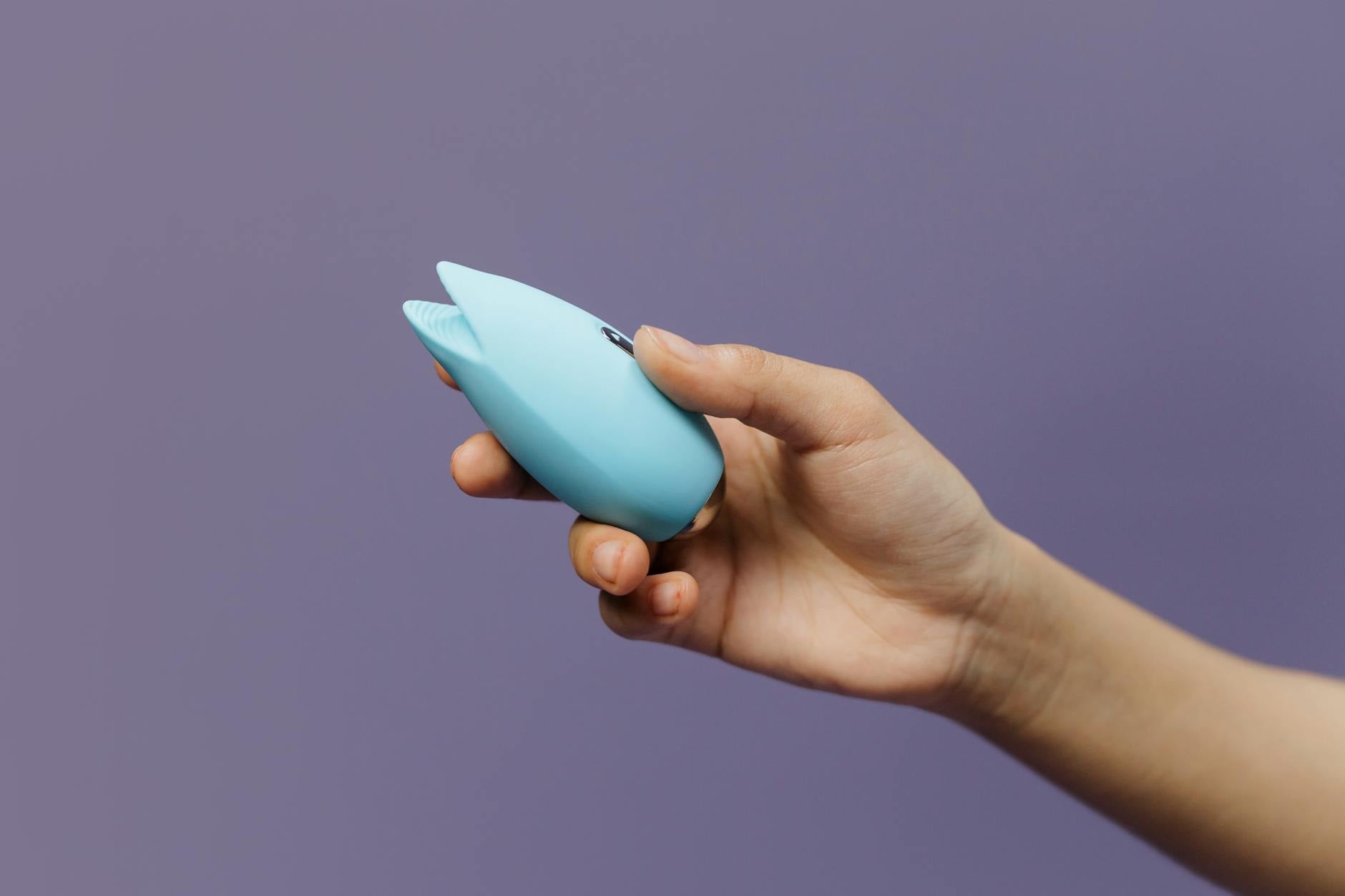
This is where a device like the Lemon clitoral vibrator becomes genuinely useful. Lemon vibrators and other clitoral suckers work by creating gentle suction and pulsation rather than direct friction vibration. Here's why that matters postpartum:
Suction wakes up numbed nerves. The clitoris is packed with nerve endings, but during postpartum numbing, those nerves aren't firing as readily. Suction stimulates a different set of nerve pathways than friction does. For some people, their clitoris barely responds to touch but lights up immediately under suction. It's like switching on a light in a room where the normal switch isn't working.
No pressure on healing tissue. If you have a tear or episiotomy, direct friction can irritate healing tissue or create micro-tears. Suction is gentler on that area because you're not rubbing against it.
Lower barrier to arousal. Because lemon vibrators require less effort to create sensation, they can help your body get to arousal faster when arousal is taking longer to build. That matters when you're exhausted and have limited time.
Start with the lowest suction setting. Pattern 1 or 2 on most devices. Your numbed nerves need time to wake up, and jumping to high intensity can feel overwhelming or even slightly painful in a way that discourages you from trying again.
The practical timeline and what to expect
Weeks 1-6: You're cleared medically to have sex, but sensation is still muted. Penetration or external touch might feel uncomfortable or numb. This is not the time to expect orgasm or even strong arousal. Your job is just to gently reacquaint yourself with touch without expectation.
Weeks 6-12: Sensation starts returning, but it's slower and less intense than pre-pregnancy. This is when lemon clitoral vibrators often become useful. Low suction, short sessions. 5-10 minutes, a few times a week. You're not trying to orgasm yet. You're training your nervous system to recognize sensation again.
Months 3-6: Sensation gradually normalizes. If you're nursing, this might take longer. If you had significant tearing, expect this phase to extend toward 6-12 months. Pelvic floor physical therapy during this window dramatically speeds up recovery.
Months 6+: Most people feel significantly more like themselves. Sensation is closer to baseline. Arousal speed is faster. Orgasm is possible and often intense.
What actually helps (besides the vibrator)
Four things I recommend to almost every postpartum client:
Pelvic floor physical therapy. Not just Kegels. A trained PT can assess which parts of your pelvic floor are weak versus chronically clenched, and give you targeted exercises. This speeds healing by 4-8 weeks. Most insurance covers it if you have a doctor's referral.
Estrogen cream if you're not nursing. Topical estrogen (estriol or estradiol) applied to the vulva increases tissue thickness and blood flow locally without much systemic absorption. If you're not breastfeeding, this can be transformative. Talk to your OB/GYN about whether it's appropriate for you.
Longer foreplay. Budget 20-30 minutes before any sexual touch. Your body needs more time to warm up. That's not a failure. That's your postpartum baseline.
Touch without goal. Have your partner (if you have one) touch you in non-sexual contexts. Hand on your shoulder. Cuddling on the couch. A 10-minute shoulder massage. These reset your nervous system's relationship with touch. After months of being climbed on, nursed on, or touched for sex, your body needs to remember touch as connection, not demand.
The emotional layer that nobody mentions
Postpartum sensation changes come wrapped in grief, identity loss, and touched-out exhaustion. You just spent nine months growing a human and then pushed it out of your body. Your breasts might be leaking. Your body doesn't feel like yours. And now you're supposed to want sex again.
You don't have to want sex. Your partner doesn't deserve sex just because six weeks have passed. Your job is to slowly reacquaint yourself with what pleasure feels like in your changed body. Some of that exploration can be solo, with a lemon clitoral vibrator and zero pressure to orgasm. Some of it can be partnered, but only if you actually want it.
If you're not feeling desire yet, that's normal. Postpartum hormones suppress desire. Sleep deprivation obliterates desire. Being touched out obliterates desire. If you're nursing, the oxytocin from nursing can paradoxically reduce sexual desire (evolutionary trick to space pregnancies). These things are temporary.
One more thing: if postpartum depression or anxiety is present, desire and sensation are often early causalities. If you're struggling, reach out to your OB/GYN or a therapist. Treating the depression or anxiety often restores sensation and desire naturally.
FAQ: Common questions about postpartum sensation and lemon vibrators
Is it safe to use a vibrator if I had a cesarean section?
Yes, once your incision is fully healed (usually 6-8 weeks). You can use a lemon clitoral vibrator without any risk to your scar. Avoid internal vibrators until you feel ready, and if you use any internal device, make sure the area feels pain-free first. Your clitoris is completely separate from your surgical site and heals on its own timeline.
How long does sensation usually come back after a vaginal birth?
Most people report noticeable improvement by 12 weeks. Significant return to baseline usually happens by 6 months, especially with pelvic floor physical therapy. If you had major tearing or an episiotomy, it can take 9-12 months for full sensation recovery. Breastfeeding delays hormone recovery and can extend this timeline another 2-4 months. This is normal and usually temporary.
Can I use lemon vibrators if I'm breastfeeding?
Absolutely. There's nothing in your breastmilk that changes because you used a vibrator. The only consideration is timing: breastfeeding suppresses estrogen, which affects tissue thickness and sensation. So sensation recovery might take longer while nursing. But using a lemon clitoral vibrator during nursing is completely safe.
My sensation came back but it feels different than before. Is this permanent?
Often it changes again as your hormones fully stabilize, usually months after weaning or after postpartum hormone levels fully normalize. Some people report that sensation actually improves postpartum once recovery is complete. You're not the same body anymore, but different doesn't mean worse. Many people find postpartum sensation more intense and nuanced than pre-pregnancy.
Should I avoid orgasm if sensation feels numb?
No, but adjust your expectations. If you're chasing an orgasm that feels the same as it did before, you'll get frustrated. Instead, try using a lemon clitoral vibrator and aiming for any sensation shift, not orgasm. Some sessions will feel muted. Some will surprise you with intensity. This is normal variation postpartum. The goal is reconnection, not performance.
Is pelvic floor therapy necessary or just helpful?
It's helpful but not strictly necessary for most people. Your pelvic floor will eventually recover on its own. Physical therapy just speeds the process. If you have any pain, heaviness, leaking, or sensation changes that aren't improving by 3 months postpartum, therapy is worth pursuing. If recovery is happening naturally, it's optional but beneficial.
You're not broken. You're rebooting.
Postpartum sensation changes aren't a sign that something went wrong. They're a sign that something enormous happened. Your nervous system is recalibrating. Your hormone levels are finding new baseline. Your tissues are healing. Your identity is shifting. All of that takes time.
Lemon vibrators and other clitoral suckers can be useful tools during this reboot. They're not a fix. But they can help you reconnect with pleasure when sensation feels distant, and that reconnection matters.