Let's talk about what postpartum bodies actually feel like
Your sex life doesn't just pause after you have a baby. It gets rewired. Sensation dulls, arousal takes longer to kick in, and pleasure that used to arrive reliably now feels like it's coming through a thick fog. You're not broken. Your nervous system is still recovering from one of the most intense physical events your body will ever experience.
Most postpartum people expect bleeding and soreness. Nobody really preps you for the sensory amnesia. That's the part nobody explains clearly, and it's the part that makes you wonder if you'll ever feel pleasure the way you did before.
Here's what's actually happening, and what you can do about it.
Why sensation changes after delivery
Delivery (vaginal or cesarean) involves massive hormonal shifts, tissue trauma, and nervous system activation. Even with a textbook recovery, your body doesn't simply snap back. Several things are working against sensation right now.
First, prolactin levels are elevated if you're breastfeeding. Prolactin suppresses dopamine, which directly impacts arousal and pleasure. You're literally being biologically primed to focus on feeding a newborn, not on your own sensation.
Second, if you had a vaginal delivery, the tissue is thinner and more fragile than pre-pregnancy. The pudendal nerve, which carries sensation to the clitoris, can be stretched during delivery. This isn't permanent, but it means touch that used to register as intensely pleasurable now feels muted.
Third, sleep deprivation and cortisol (stress hormone) are through the roof. Your nervous system is in survival mode. Pleasure pathways literally quiet down when you're exhausted and stressed.
Add in the fact that you're probably not feeling great about your body right now, and arousal becomes a three-front battle: physical numbing, hormonal suppression, and emotional disconnection all at once.
How clitoral vibrators help restore sensation
Unlike gentle touch, which might not register through the numbness, vibration bypasses the dulled sensation and directly stimulates nerve endings. The clitoris has about 8,000 nerve endings. Vibration wakes them up.
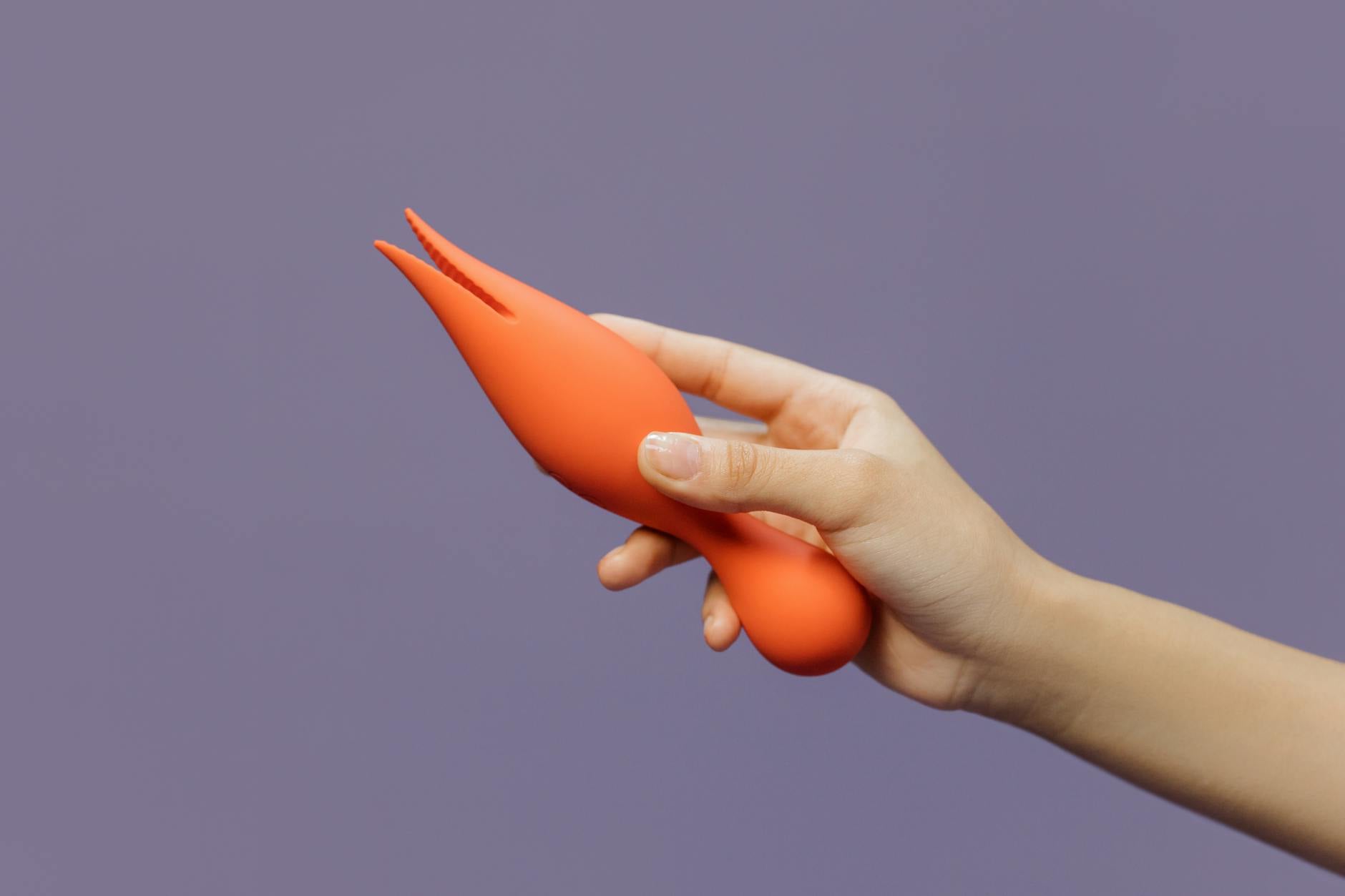
Lemon vibrators, particularly air-suction designs like the Lem, work differently than traditional vibrators. Instead of relying on direct friction, they use gentle suction that creates pulsing stimulation. This is crucial postpartum because your tissue is tender. You get intense sensation without the aggressive pressure your healing body can't handle.
The suction design also means you're not putting weight or sustained pressure on sensitive areas. You can use it while lying down without needing to engage your core or pelvic floor, which is huge when you're still recovering.
When to start: the timeline that actually works
Doctors typically clear you for penetrative sex at 6 weeks postpartum (longer if you had significant tearing or a cesarean). But clearance for penetration isn't the same as readiness for pleasure. Here's a timeline that makes more sense.
6 to 8 weeks: Focus on touch without vibration. Gentle self-massage, hand exploration, partner touch. Your nervous system is still very raw. You're rebuilding the basic wiring.
8 to 12 weeks: If lochia (postpartum bleeding) has stopped and you're feeling emotionally ready, you can introduce a Lemon vibrator on the lowest setting. Start with 2-3 minute sessions. This isn't about orgasm. This is about teaching your nervous system that sensation can feel good again.
12+ weeks: You can experiment with longer sessions, higher patterns, and more intentional pleasure-seeking. But honestly, some people don't feel ready until 4 or 5 months postpartum. There's no rush.
The key is that you initiate this, not your partner. Your pleasure matters, and it gets to be about you first.
How to actually use a Lemon clitoral vibrator when sensation is muted
Start small and let your body surprise you.
Positioning matters. Lie on your back with a pillow under your hips, or on your side. You want zero tension in your pelvic floor. If you're tense, nothing works. Spend 5 minutes just breathing and relaxing before you even turn on the vibrator.
Warm up first. Spend 10 minutes touching yourself with your hands. Trace your inner thighs, belly, breasts, everywhere except the clitoris initially. Build sensation gradually. Your nervous system needs permission to wake up.
Use the lowest pattern. Most Lemon vibrators have 7 or more patterns. Start with pattern 1. It sounds tame, but your post-baby nervous system will thank you. You can always increase intensity. You can't undo overstimulation as easily.
Apply generous lubrication. Even if you don't feel super wet, use water-based lube. Your tissue is drier postpartum, whether you're breastfeeding or not. Friction without lubrication feels harsh, not pleasurable.
Wait for arousal to build. This is the hardest part postpartum because arousal might take 20 or 30 minutes to arrive. Your brain is used to being hijacked by a crying baby every time you try. Commit to the time. Put your phone in another room. Tell your partner you need uninterrupted time. Make it sacred.
Stop if anything hurts. Not the good burn, not sensation you're not used to. Actual pain. Pain means something isn't healed yet, and you need to give yourself more time.
The mental piece (it's bigger than the physical)
Here's something nobody tells you: postpartum pleasure isn't a physical problem you fix with a vibrator. It's a nervous system that's terrified of being interrupted, a body that doesn't feel like yours, and a brain running a thousand tabs of mom-guilt.
So using a Lemon vibrator becomes an act of reclamation. It's you saying: my pleasure matters. My body is still mine. I deserve sensation and desire and orgasm, even though I'm also a parent now.
That frame changes everything.
If you have a partner, don't make this about them or about "getting your sex life back." This is about you rebuilding connection to your own body. Your partner's job right now is to take the baby for 30 minutes while you have an appointment with yourself.
If you don't have a partner or you're in a phase where partner sex doesn't appeal to you, that's completely normal postpartum. Your solo sexuality is just as valid and important as partnered sex. Maybe more important, because you're not negotiating anyone else's timeline.
What to expect (and what not to expect)
Your first orgasm postpartum might feel different. Weaker, less full-bodied, more localized. That's the nerve damage and hormone situation talking. It will improve. Most people report that sensation normalizes by 6 months, sometimes sooner.
Some days the vibrator will feel amazing. Other days, you'll feel nothing. That's not failure. That's your nervous system still calibrating. Consistency helps more than intensity.
Don't aim for orgasm. Aim for sensation. Aim for 10 minutes of not thinking about bottles or sleep schedules or whether the baby monitor is on. Aim for your body feeling like it belongs to you again.
If you have pelvic floor tension, which is common postpartum, that tension will actually dampen sensation further. Pelvic floor physical therapy combined with gentle vibration work can be a game-changer.
The longer arc
Using Lemon vibrators postpartum isn't about bouncing back to pre-baby pleasure. It's about rebuilding sensation in a body that's transformed, with a nervous system that's been completely rewired, in a life that's completely different.
That's not regression. That's integration.
Some people find that postpartum pleasure, once it arrives, feels deeper than before. Your body has done something extraordinary. Your nervous system has expanded. You know what real vulnerability feels like. That can make pleasure more meaningful, not less.
But you have to meet your body where it is right now, which means starting slow, being patient, and understanding that sensation doesn't come back on a timeline. It comes back when your nervous system feels safe enough to feel again.
FAQ
Can I use a Lemon vibrator while breastfeeding?
Yes, absolutely. Prolactin suppresses arousal, but it doesn't prevent it. You might find that arousal takes longer or feels less intense while breastfeeding. That's normal and temporary. Once you wean (whenever that is), sensation often snaps back pretty quickly.
What if I feel nothing even with vibration?
Prolactin and sleep deprivation can muffle sensation hard. If you're genuinely feeling nothing after the 12-week mark, talk to your doctor. Thyroid issues and postpartum depression both affect sensation and arousal. You're not broken. Your body might just need support you don't know about yet.
Is it normal to not want sex at all postpartum?
Completely normal. Your body just grew and birthed a human, or recovered from surgery. Touched out doesn't begin to describe it. You don't need to reclaim pleasure on anyone's timeline but your own. Some people feel ready at 3 months. Some take a year. Both are fine.
Can my partner use a Lemon vibrator on me?
Yes, if you want that. But start solo first. Your body needs to remember how to receive sensation without the pressure of a partner's expectations or timing. Once you've rebuilt that connection for yourself, adding a partner becomes about sharing something you already own.
What if I had tearing or a fourth-degree tear?
Wait longer. Talk to your doctor before using any vibrator. You might be cleared at 6 weeks, or it might be 3 months. Once you do start, use the gentlest pattern and stop immediately if anything feels painful. Physical therapy for pelvic floor recovery is especially valuable here.
How do I explain to my partner why I need this time alone?
Honestly: "My body is still recovering. My nervous system is rewiring. I need to rebuild connection to my own pleasure without performance pressure. This is part of my recovery, not instead of us." If your partner loves you, they'll get it. And if they don't, that's worth examining.
Your postpartum body isn't broken. It's rebuilding. And pleasure, once sensation returns, is waiting on the other side.